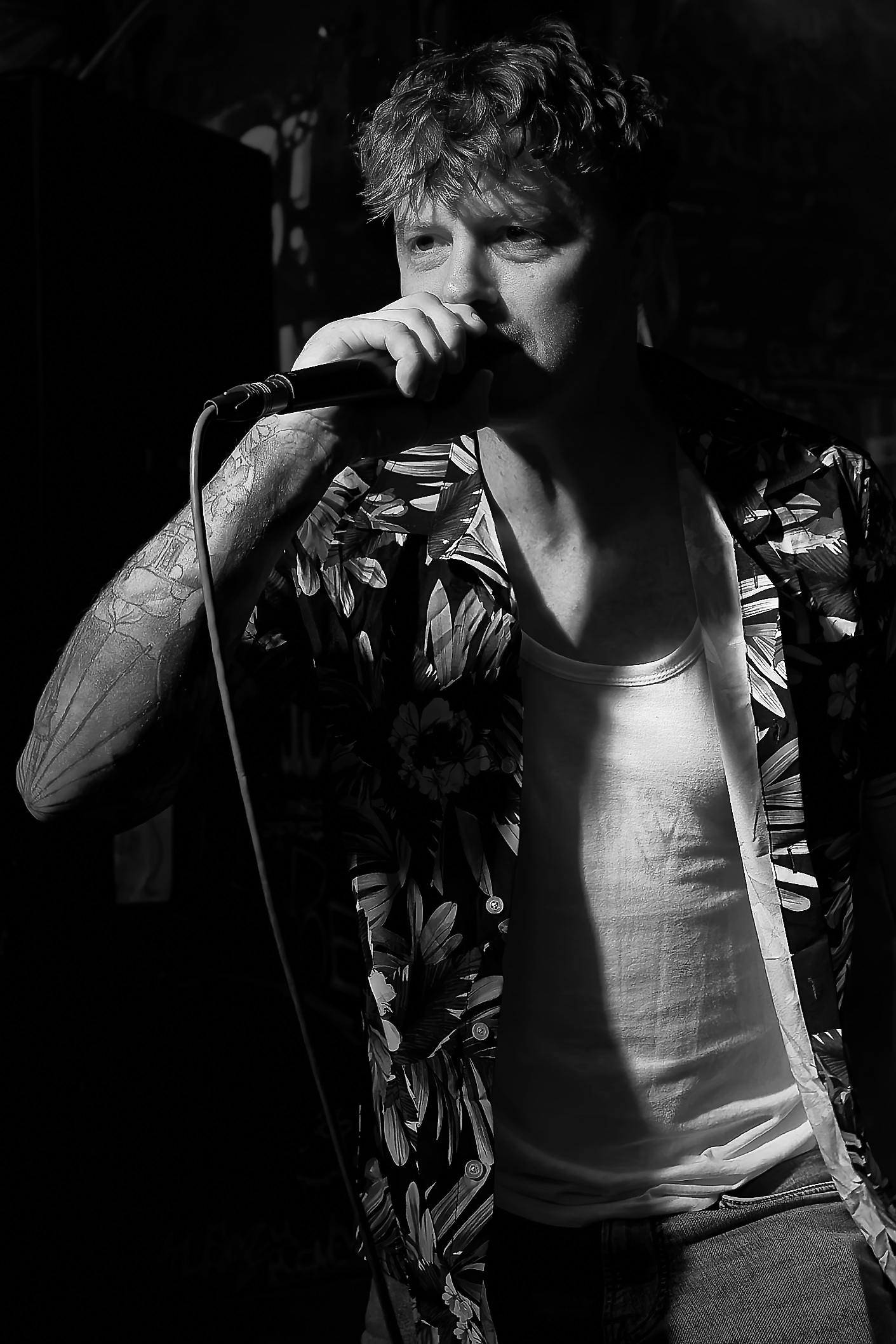
experts say that gig photography is the most challenging er… gig in the field of photography. let’s have a look at what we have to contend with:
- a dark room which pushes your lenses and sensors to the limit
- constantly changing lights which play havoc with your metering
- musicians moving just as you’ve got them in focus!
- musicians moving and creating motion blur
- compromised viewing angles
no wonder, then, that in a typical shoot of 400+ images, less than half of those will be acceptable; of those, less than half will be usable with editing; you’ll be lucky if 50 are at presentation level straight out of the camera.
to ensure that I provide you with a product that will satisfy or exceed your requirements, i use the following gear:
- a canon r6 mkii full-frame, mirrorless camera body
- a canon rf24-70mm l-series lens
- a canon rf16mm lens
- a neewer z2-c 2.4g ttl round head flash speedlite
it’s when the shoot itself is over that the hard work begins. like most serious photographers, i shoot in raw format which gives the best image quality but is not usable by the client until it has been edited.
here’s the process:
- upload all the raw files onto the pc
- view and evaluate all 400+ files, culling instantly when an image is not acceptable
- further evaluate and cull so that we end up with c.50 killer shots
- import these into dxo photolab 9 and nik collection 9 photo editing software for cropping, denoising, sharpening and enhancing
- if b&w is required, this involves a further process
- export all edited files as jpegs to be viewed and used by the client
each of the 50 “killer” shots will be individually edited (rather than batch edited) before they are released to the world. that equates to many hours of work on the pc to get the portfolio to the client.
it is the time i spend on the pc that will make your photos super-special.